Blog
Moving from Tally to Cloud ERP in the UAE
Octate Team
2026-08-21
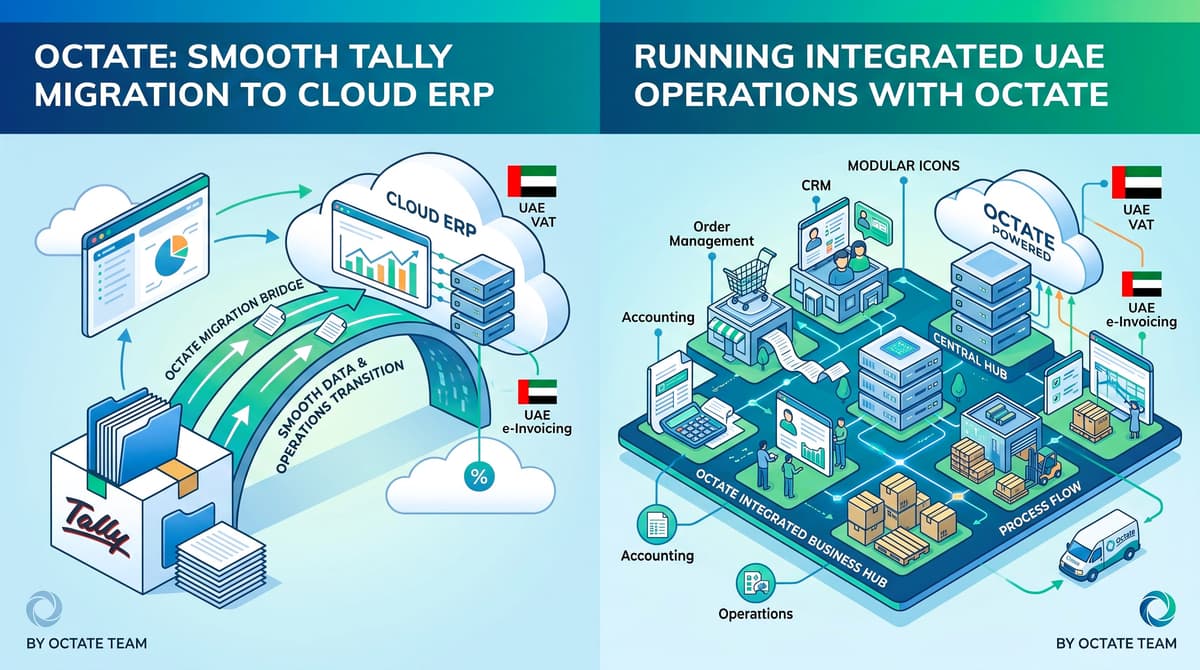
Why UAE businesses migrate from Tally to cloud ERP, what changes in day-to-day finance and operations, and how to plan a low-risk cutover.
Tally has served many UAE SMEs well for bookkeeping. As teams add warehouses, multi-entity reporting, approvals, and e-invoicing mandates, desktop-centric workflows often become a bottleneck. Moving to cloud ERP in the UAE is less about replacing a ledger and more about connecting finance with inventory, procurement, and operations.
Signs you have outgrown Tally
- Month-end close depends on exports and manual reconciliations
- Inventory or purchasing lives in separate spreadsheets
- Multi-user access and remote work are painful
- You need stronger audit trails and role-based approvals
- UAE e-invoicing and multi-company reporting are on the roadmap
What cloud ERP changes
A modern cloud ERP consolidates accounting and finance with operational modules so invoices, stock, and orders stay in sync. Updates deploy automatically, backups run continuously, and teams work from a browser — which is why many UAE SMEs go live in weeks rather than months.
Migration checklist
- Scope — decide which modules you need at go-live versus phase two.
- Data — chart of accounts, opening balances, customers, vendors, and item masters.
- Processes — map approvals, VAT treatment, and reporting packs.
- Timeline — follow a realistic ERP implementation plan (often 2–6 weeks for smaller businesses).
- Training — finance first, then warehouse and sales users.
How Octate supports the move
Octate’s implementation team migrates data from Tally, Excel, and other legacy systems with mapping and validation before go-live. Start with the ERP Software UAE overview, review accounting capabilities, then talk to us about a migration plan that fits your close calendar.
